What Industries Use Panel Benders? Key Applications in Sheet Metal Manufacturing
Oct 10, 2026
Read:76
Source: armdax
What Industries Use Panel Benders?
When manufacturers consider investing in a panel bender, one of the first questions they usually ask is:
What products can this machine actually make?
A better question is:
Where can automated bending improve the production process?
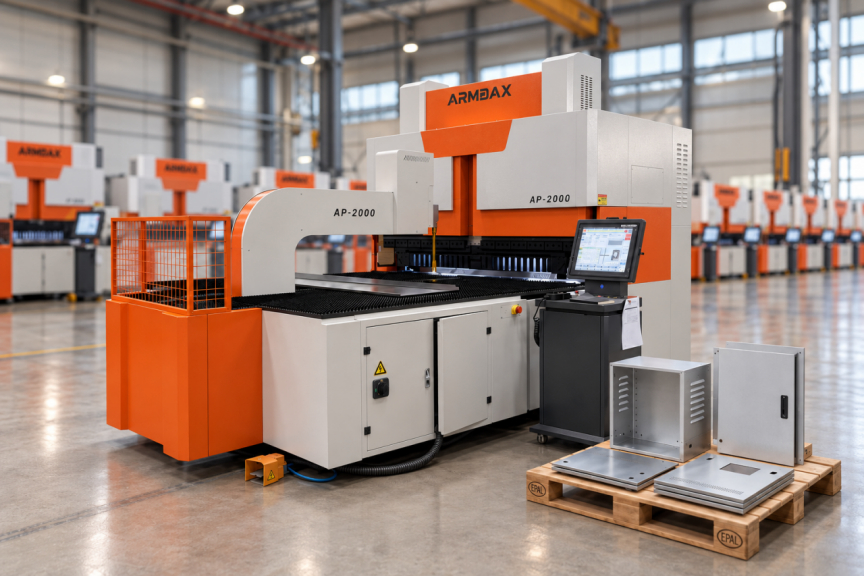
Panel benders are particularly suitable for manufacturers producing sheet metal cabinets, panels, doors, shelves, boxes, covers and enclosures that require multiple bends.
For suitable products, automated bending can reduce repetitive manual positioning, simplify multi-side bending and create a more consistent production process.
Below are some of the most common industries using panel bending technology.
01 Electrical Cabinets and Control Enclosures
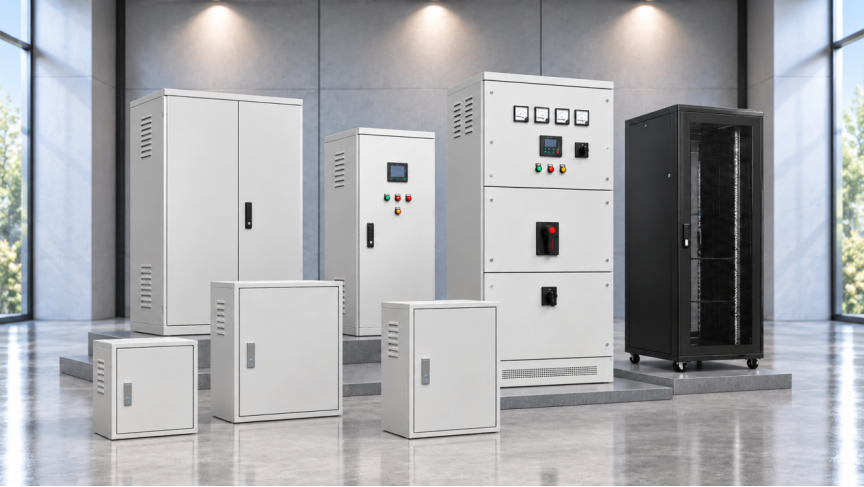
Electrical cabinet manufacturing is one of the most common applications for panel benders.
Typical products include:
- Electrical cabinets
- Switchgear enclosures
- Control boxes
- Server and network cabinets
- Distribution cabinets
- Distribution boxes
- Outdoor electrical enclosures
- Cabinet doors
These products share one common characteristic: the same sheet metal blank often requires multiple bends on different sides, while cabinet dimensions can vary significantly.
From a 90 mm-deep lighting distribution box to a 350 mm-deep outdoor electrical enclosure, and then to larger floor-standing distribution cabinets, the cabinet depth determines the required bending height of the side walls. This is an important parameter when selecting a machine.
The bending height requirements of most distribution boxes, outdoor electrical enclosures and distribution cabinets are within the 350 mm maximum bending height of ARMDAX panel benders.
For manufacturers producing multiple cabinet sizes or repeated batches of similar parts, automated positioning and programmed bending can reduce repetitive manual handling while maintaining consistency between production batches.
For this industry, the value is not only bending speed.
It is also flexibility, repeatability and the ability to produce multiple cabinet sizes on the same machine.
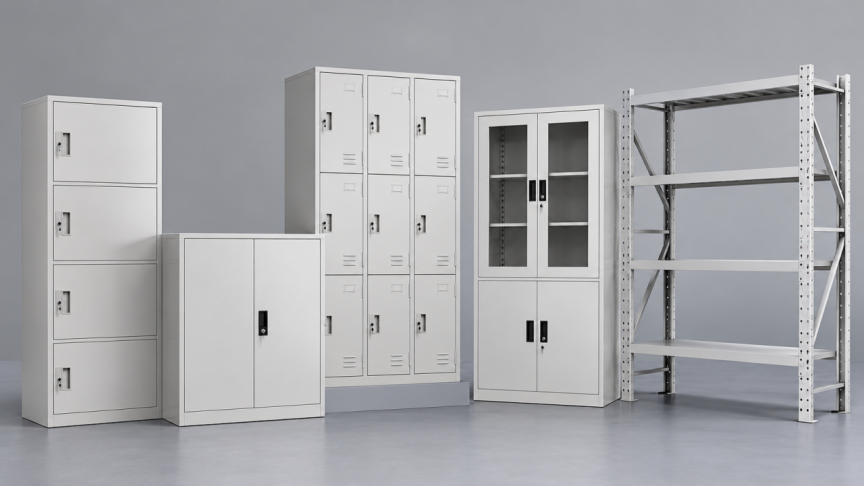
02 Metal Furniture, Shelving and Storage Systems
Metal furniture and shelving manufacturers commonly produce:
- Storage cabinets
- Shelving panels
- Tool cabinets
- Drawers
- Filing cabinets
- Storage systems
- Laboratory furniture
A single cabinet usually contains several sheet metal components, such as doors, side panels, shelves, top panels and drawers, and each component may require multiple bends.
This industry is typically characterized by large production batches and frequent repeat production. Manufacturers need to maintain high output and a stable production rhythm.
Panel benders are therefore well suited to this type of high-mix, batch production.
Automated positioning and continuous multi-side bending can shorten processing time, reduce repetitive manual operations, improve overall batch productivity and maintain consistency between production runs.
For this industry, the key question is:
Can the entire batch be produced with higher efficiency and a more stable production rhythm?
03 Commercial Kitchens and Refrigeration Equipment
In commercial kitchen and refrigeration equipment manufacturing, stainless steel is widely used for cabinets, doors, worktables and equipment enclosures because of its corrosion resistance, easy cleaning and good surface quality.
Typical products include:
- Stainless steel cabinets
- Stainless steel kitchen cupboards
- Refrigerator panels
- Freezer doors
- Cooker hoods
- Commercial kitchen worktables
- Commercial equipment enclosures
For these products, surface quality is an important manufacturing requirement.
This is especially important when stainless steel is processed without protective film or when the finished product contains directly visible surfaces.
During bending, scratches, pressure marks and other surface damage should be minimized.
A stable bending process helps control forming quality and surface appearance, reduce defective parts caused by scratches, pressure marks or unstable forming, and improve consistency in batch production.
For this reason, panel benders are particularly suitable for batch production of stainless steel cabinets, doors, panels and equipment enclosures.
04 Steel Doors, Laboratory Doors, Medical Doors and Elevator Components
Typical applications include:
- Steel doors
- Fire-rated doors
- Laboratory doors
- Medical doors
- Elevator doors
- Elevator cabin panels
- Elevator entrance components
These products are usually characterized by large dimensions, long bending lengths and relatively thick sheet metal.
When processed on a conventional press brake, large workpieces often need to be repeatedly turned and repositioned manually during multiple bending operations.
This increases operating difficulty and places greater demands on operator coordination and physical effort.
Panel benders can use automated positioning, rotation and continuous multi-side bending to reduce manual turning and repeated positioning of large workpieces, lower labor intensity and improve batch production efficiency and stability.
For products such as steel doors, laboratory doors, medical doors and elevator components that involve large dimensions, multiple bends and batch production, automated bending offers clear advantages.
05 Machine Covers and Industrial Enclosures
Almost every industrial machine requires some form of sheet metal protection.
Typical products include:
- Machine covers
- Safety guards
- Equipment housings
- Electrical enclosures
- Control cabinets
- Acoustic covers
OEM manufacturers usually produce machines in different sizes and models.
This means their sheet metal components also change frequently.
A flexible panel bender can help manufacturers produce different enclosure families without relying heavily on repeated manual positioning and setup.
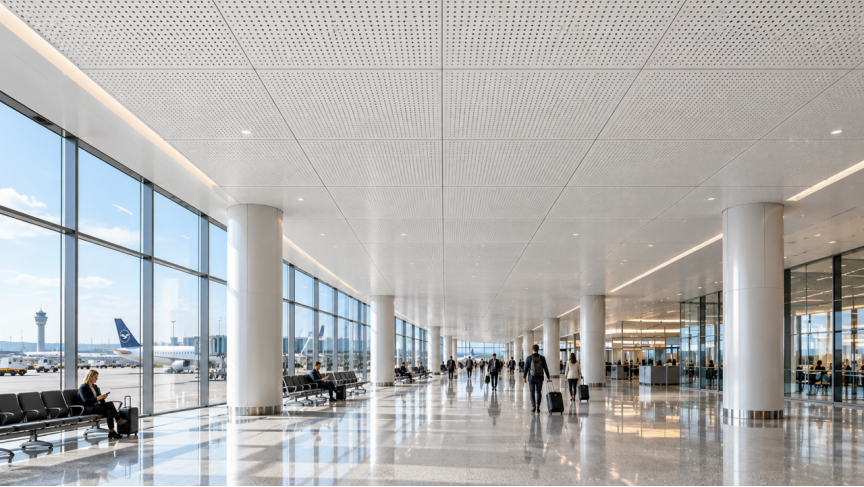
06 Architectural and Interior Decorative Panels
Architectural and interior decorative panels usually combine several demanding requirements:
Large dimensions + pre-painted or visible surfaces + high accuracy + multi-panel assembly + high consistency
Typical products include:
- Aluminum ceiling panels
- Metal ceilings
- Metal facade panels
- Facade cassettes
- Wall panels
- Decorative panels
- Roofing components
Many of these products are assembled from multiple sheet metal panels to form a complete wall, ceiling or facade system.
Therefore, in addition to the forming quality of each individual panel, uniform joint gaps, straightness and consistency between adjacent panels directly affect the final installation quality and overall appearance.
Many of these products also use pre-painted sheet metal or aluminum decorative surfaces, so scratches, pressure marks and surface deformation should be minimized during bending.
For this type of batch-produced decorative panel, manufacturers typically focus on:
dimensional consistency, straightness, joint quality, surface quality and a stable production rhythm.
A stable automated bending process can improve the forming consistency of large panels, helping panels from different production batches maintain straight edges and uniform joints during final assembly.
07 Medical and Laboratory Equipment
Medical and laboratory equipment commonly uses stainless steel or coated sheet metal.
Typical applications include:
- Medical cabinets
- Laboratory cabinets
- Storage systems
- Stainless steel furniture
- Equipment enclosures
- Medical carts
These products typically require consistent dimensions and clean finished surfaces.
When manufacturers need both production consistency and flexibility across different product sizes, automated bending can be a suitable solution.
08 Sheet Metal Job Shops and Contract Manufacturers
Panel benders are not limited to one specific industry.
A contract sheet metal manufacturer may produce:
Electrical cabinets today.
Machine covers tomorrow.
Stainless steel cabinets next week.
This makes flexibility extremely important.
For job shops, automated bending should be evaluated based on questions such as:
- How much manual handling is currently required?
- How many different parts are being produced?
- How often does production change from one product to another?
- Is bending becoming a production bottleneck?
These questions are often more important than simply comparing bending speed.
What Products Are Best Suited for a Panel Bender?
Across different industries, several product types appear repeatedly:
Cabinets. Panels. Doors. Boxes. Shelves. Trays. Covers. Enclosures.
What do they have in common?
They are generally made from sheet metal blanks and require multiple edge bends before reaching their final shape.
This is where bending automation becomes particularly relevant.
However, machine selection should always start with the actual product geometry rather than simply the industry name.
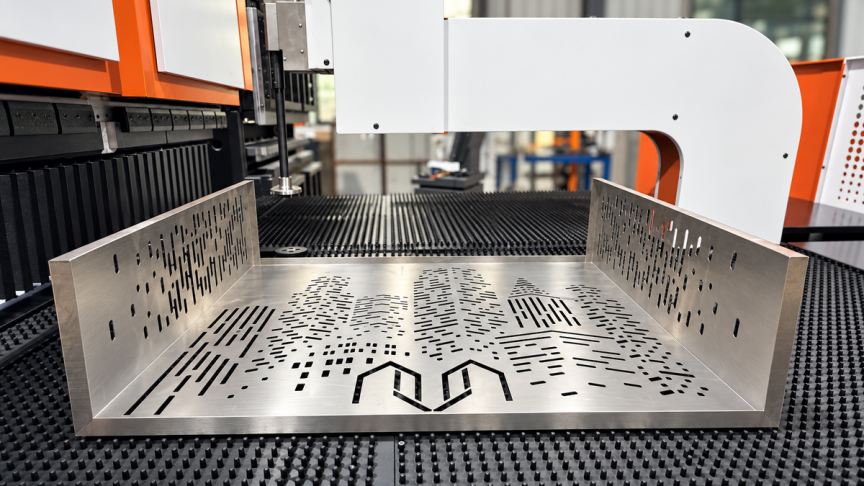
Can a Panel Bender Process Parts with Holes?
Many sheet metal parts contain:
- Large openings
- Ventilation holes
- Windows
- Extruded holes
- Embossments
- Irregular cut-outs
- Rivets
These features may affect how the workpiece is positioned during the bending process.
For this reason, ARMDAX evaluates the positioning method according to the actual part.
For highly perforated or irregular components, a suitable clamping or positioning solution can be evaluated based on the drawing and machine configuration.
A 2D drawing or 3D STEP file is the best starting point.
Panel Bender or Press Brake?
A panel bender cannot replace every press brake application.
Press brakes remain highly versatile.
Panel benders become particularly attractive when manufacturers repeatedly face:
- Multi-side bending
- Large panel handling
- Frequent repositioning
- High product variety
- Repetitive production
- Labor-intensive bending operations
In many factories, the most efficient solution is:
Panel Bender + Press Brake
Press brakes can be used for non-standard parts, while panel benders are used for standardized, batch-produced products.
Each machine handles the parts best suited to its process.
When Should You Consider Automated Bending?
Automated bending is worth evaluating when:
- Production volume is high and products are manufactured in batches
- Parts require multiple bends
- Operators repeatedly rotate and reposition sheets
- Product consistency is important
- Similar products are manufactured in different sizes
- Product changeovers are frequent
- Bending quality depends heavily on operator experience
- Labor availability limits production
- Bending labor costs are high
At this point, the discussion is no longer simply about purchasing another machine.
It becomes a question of improving the entire bending process.
How Does ARMDAX Evaluate Your Application?
At ARMDAX, machine selection starts with the product.
To evaluate your application, please provide:
- 2D drawing or 3D STEP file
- Material
- Material thickness
- Maximum part dimensions
- Number and direction of bends
- Hole and cut-out positions
- Product forming features
- Production volume
Our engineering team can then evaluate the workpiece geometry, bending sequence and suitable machine configuration.
Conclusion
So, which industries use panel benders?
Electrical cabinets.
Metal furniture.
Commercial kitchens and refrigeration.
Steel doors and elevators.
Industrial machinery.
Architectural panels.
Medical and laboratory equipment.
And general sheet metal fabrication.
But the industry itself is only the starting point.
The more important question is:
Can your current bending process become more efficient, more consistent and more automated?
If you would like to know whether your products are suitable for automated bending, send your drawings and production requirements to ARMDAX.
ARMDAX — Automatic Panel Bending Solutions for Modern Sheet Metal Manufacturing
Table of Contents